Multilingual Online Typing Master/Tutor
Welcome to Multilingual Online Typing Tutor, Multilingual Online typing tutor is an online place for learning to type in many languages. Our free typing lessons have been prepared for people of all ages, experiences and skill levels to learn how to type. With the help of Multilingual Online Typing Master you will be able to Learn to type within few days.
Whether you're a beginner or looking to improve your existing typing skills, this web app offers tailored lessons, tests, and exercises to enhance your typing speed and accuracy. In just a few hours of focused practice, you’ll see significant improvements in your typing abilities.
You can learn to type in the Pashto language with our desktop application, Download it from the Pashto Typing Master page.
We have the following sections for learning to type..

Quick Start Typing
This section will help you to quickly start practicing to type different set of keys.
Start Practicing

Get to know the keyboard
This section will help you learn to type in many languages by following proper lessons for each combination of keys.
Note: Requires Login.
Go To Lesson

Learn to type with paragraphs
This section will help you in learning to type in the language of your choice by practicing with paragraphs.
Note: Requires Login.
Go To Practice Area

Find Your Typing Speed
This section will help you to measure your typing speed and accuracy by typing a paragraph that is displayed.
Go To Test

Games
This section has games that you can play, earn points and improve your typing skills.
See Games
Watch a demo On Youtube
Tips for Maintaining Proper Posture While Typing
Maintaining good posture while using typing is essential for comfort and preventing strain.
Follow these guidelines to ensure a healthy and ergonomic typing setup:
Body Posture
- Straight Back: Keep your back straight while using the computer to avoid back pain.
- Relaxed Shoulders: Avoid lifting your shoulders; keep them relaxed to prevent tension.
- Neutral Neck: Keep your neck straight and avoid twisting or tilting your head.
- Aligned Wrists: Ensure your wrists and forearms form a straight line while typing.
- Curved Fingers: Maintain a natural curve in your fingers to prevent fatigue.
Keyboard and Mouse Placement
- Keep Devices Close: Position your keyboard and mouse close together to minimize reaching.
- Elbow Height: Ensure the keyboard and mouse are at about elbow level to maintain a natural arm posture.
Monitor Placement
- Eye-Level Alignment: Place the monitor directly in front of you, at or slightly below eye level, to avoid neck strain.
- Document Positioning: If referencing documents, keep them near the monitor to reduce neck movement.
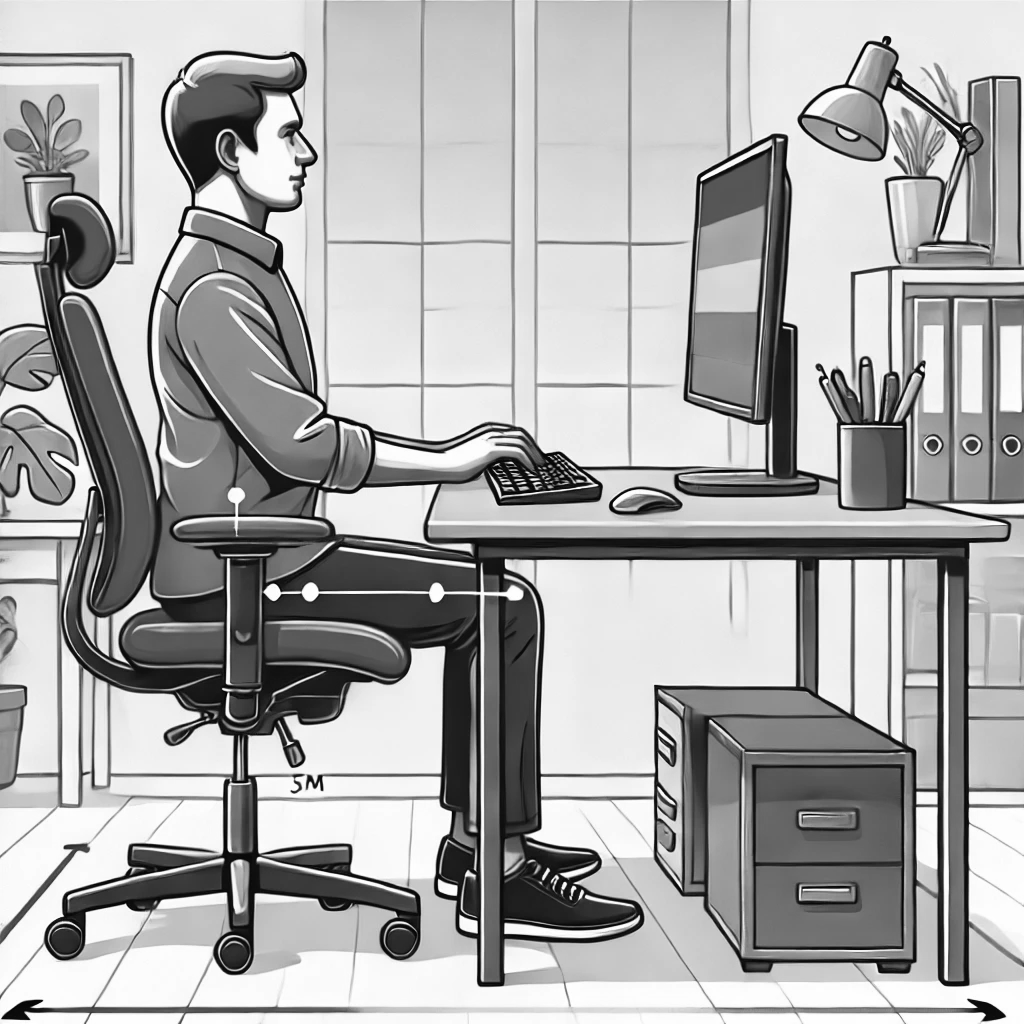
This image portrays the correct posture for using a computer.
Chair and Foot Placement
- Chair Height: Adjust your chair so your feet rest flat on the floor or on a footrest.
- Elbows Close: Keep your elbows close to your body, using armrests if available for support.
Additional Tips
- Light Typing Pressure: Avoid pressing the keys too hard to reduce strain on your fingers.
- Take Regular Breaks: Pause every 20–30 minutes to stretch, relax your muscles, and rest your eyes.
- Workspace Lighting: Use adequate lighting to reduce glare on the screen and minimize eye strain.